


Introduction: Understanding Settlement Agreements in Legal Matters
A settlement agreement refers to the kind of legally binding document that falls between you as an individual and a creditor or an alternative debt settlement company, and visibly states the definitive terms as well as the conditions for finalizing the outstanding debt. Settlement agreements often provide longed-for financial relief for those burdened by debt. However, these documents usually contain technical terms and complex legal language. This makes them difficult for most people to understand.
It is extremely important to thoroughly read the settlement agreement carefully, for it is imperative; after you sign it, you will legally agree to abide by all the provisions contained in it. Careless glances may not identify or comprehend just one of the clauses contained in it, thereby resulting in unintended fees, possible forfeiture of some rights, or even long-term consequences adverse to your credit report and finances.
This article provides a detailed explanation of how one can effectively read and understand settlement agreements. It picks out significant key clauses about which you had best sit up and take notice when reading the documents. It also contains some helpful practical tips directed at protecting you before the fateful moment of signing on the dotted line.
What is a Settlement Agreement?
We can describe it as an official agreement that finalizes the remaining debt or conflict between two entities. In debt settlement specifically, parties create this agreement when the creditor accepts a lower amount than the principal sum. This amount then serves as the final payment in full for the entire debt.
These settlement agreements could potentially include:
- Debt on credit cards
- Personal loans
- Medical costs
- Commercial disputes
- Employment or legal claims
Whatever kind of agreement it turns out to be, it’s the clauses in it that hold the key to defining and creating your rights, duties, as well as the safeguards you deserve.
Why It Matters Most to Read Settlement Agreements
- Legally binding: It cannot ever be broken after it has been signed without consequences.
- Concealed risk clauses: There may be additional fees or restrictions in the contract that are not expressly detailed or explained in plain language.
- Effect on credit: Settlement may damage a credit score if it’s reported as negative.
- Future obligations: There may be some clauses affecting the financial or legal rights.
Critical Clauses You Should Be on the Lookout for in the Settlement Agreement
While reading the agreement for settlement, pay special attention to the following provisions:
1. Parties Involved
This clause also functions to specifically recognize the parties or the company involved in entering into the agreement. Care should be taken to make sure that:
- The name and the details of the account you provided are right.
- The identity of the creditor, or the debt settlement company, is clearly and irrefutably specified.
- No outsider ever comes in without your explicit understanding and authorization.
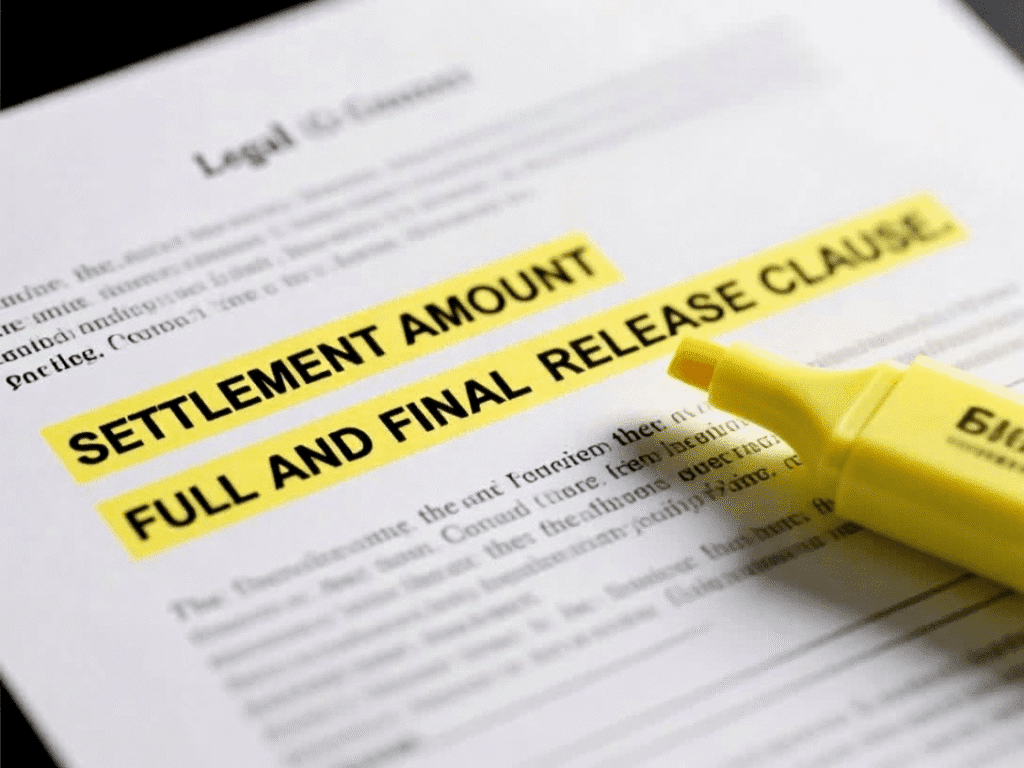
2. Amount of Settlement and Terms of Payment
The section in question is also held in the highest esteem as the most important section. Within the section, it should incorporate the following aspects:
- Number of times an amount shall be paid.
- Deadlines for the submission of payments.
- The payment procedures vary between the application of checks, bank transfers, and settlement accounts.
- Confirmation of the payment of the whole debt (not collecting in the future).
Caution: Note well that it is crucial that the agreement must not only implicitly imply that the payment made fully discharges the debt but must so indicate expressly. Otherwise, it’s possible you may still legally remain bound for the rest due.
3. Release of Liability
It is the purpose of this section to provide for the stopping of any actions by the creditor once you bring together and comply with all the payments for the debt. It therefore follows well for you to pay attention and look for phrases such as:
- Settlement of all pending matters once and for all
- Release of claims
- The creditor waives any further right to collection
4. Confidentiality Clause
Others also provide for the aspect of confidentiality, whereby you are not supposed to divulge the actual contents as well as the provisions of the agreement to any person except the parties. In the context of cases involving debt, the provisions for confidentiality are less common but not entirely unheard of; they become more common among business or workplace settlements.
5. No Admission of Liability
Creditors or different businesses frequently insert a particular clause in their settlement agreements. This clause expressly states that the settlement does not amount to an admission of any wrongdoing on their part. Such a provision is normal practice in the context of these transactions and is generally not adverse to your interests. Understanding the purpose behind this clause is nonetheless useful to help you grasp its full meaning in the agreement.
6. Governing Law and Jurisdiction
It encompasses the precise definition of the state whose laws will apply in the event of conflicts between the agreement terms. Be sure to pay attention to this fact, especially if you live in a different state from the one where the creditor who engaged in the agreement lives. Be sure to critically review this point, as it may affect your legal rights as well as protections significantly.
7. Tax Implications Clause
A few agreements also provide for you being held liable for taxes on forgiven debt. In most cases, the IRS regards forgiven debt as taxable income. Make sure you understand this potential cost.
8. Clause Relating to Default or Repudiation of Contract
In this part of the section, we explain the implications of not complying with the agreement terms, for example, the non-payment when payment is due. Normally, in this situation, the whole sum of the debt might need to be remitted fully once more. You must read through this information carefully in order for you fully to appreciate the possible risk involved.
9. There is an arbitration clause for the resolution of disagreements.
Some agreements require conflicts to go through arbitration instead of the court. Arbitration isn’t public and has a bias toward corporations, so pay attention to the rights you may waive.
10. Attorney’s Fees Clause
Check if the agreement binds you to pay the legal charges of the creditor in the event of any dispute. It may lead to hefty financial risk.
Directions for Reading and Interpreting Settlements Effectively
- Read slowly and carefully – Take no chances; understand each clause.
- Highlight the crucial words by expressly indicating certain sums, stating the due dates, and listing the relevant conditions.
- Pose Questions – In the unlikely event that something is ambiguous or confusing, feel free to clarify by submitting the question in writing.
- Be on the Lookout for Hidden Charges – Read carefully for any confusing or vague mark language that may use the term “additional costs” or “extra expenses.”
- Confirmation for an Absolute and Total Discharge – It should also be indicated in the agreement that the debt was fully paid and thus fully discharged.
- Seek the Advice of an Expert – In unsure situations, bring an attorney into the equation.
Red Flags in Settlement Agreements
Exercise caution and beware if you see:
- There are certain blank spots that remain unfilled in the agreement.
- Terms granting the lender the privilege of selling or liquidating your outstanding.
- Clauses designed to restrict your right to call into question and dispute any errors included.
- Language that is vague, excessively generic, or presumes an unbalanced and biased perspective.

The Impact of Settlement Agreements on Your Credit Score
- Debt Settlement Impact: Even though you settle the deal on the debt, it’s important to note that the credit report may still indicate the notation as “Settled for less than full balance.” This particular notation may actually financially harm you in the credit ranking field.
- Bankruptcy Alternative: More short-term harm but less long-term harm compared to bankruptcy, but it still reduces your credit score.
- Future Loans: Credit lenders might not issue approval for future applications for credit in the unlikely event that they find settlements included on your credit report.
Legal Rights While Entering into the Act of Signing Settlement Agreements
- You also have the irrevocable right to negotiate the terms being offered.
- You don’t necessarily need to sign on the spot.
- You also have the right to review the contract at issue thoroughly with the help of an experienced lawyer who shall advise you professionally.
- Under the Fair Debt Collection Practices Act (FDCPA), the collectors shall not misrepresent any term or force you into an unfair settlement.

Conclusion: Reading Settlement Agreements Carefully and Wisely
A settlement agreement may sound like an effective way to settle debts without the hassle of lawsuits, but only when you know exactly what you’re getting into. Those important clauses, settlement figure, release of liability, payback provisions, as well as tax consequences, make all the difference between the agreement being in your best interest or an open ticket for potential future harm.
Always sign before:
- Read carefully.
- Ask questions.
- Keep an eye out for red flags.
- Get professional advice when needed.

By going through it thoroughly and understanding it well, you will feel at ease before signing it, as it not only provides actual relief but also protects and ensures the security of your future financially.
[…] Need more information about how to read settlement agreements before signing? […]